Why So Many Wine Lists Look the Same — And What Restaurants Are Missing
I had one of those moments recently…
Ok, I have them a lot…
Sitting at a restaurant, excited to see the wine list, only to find the same wines I see everywhere else.
And it made me think…
With the sheer number of incredible wines available today, why do so many wine lists still feel so predictable?
It’s not about access.
There has never been more diversity, quality, and value in the wine market than there is right now, across regions, varietals, and price points. Importers and distributors are bringing in extraordinary wines that, ten or even five years ago, most restaurants would not have had exposure to.
The real difference comes down to intention. Building a wine list today is not about choosing from what is available. It is about thoughtfully selecting wines that align with the menu, the concept, and the overall experience you want your guests to have. It requires stepping outside of the familiar, asking better questions, and being willing to curate rather than default. That is where a wine list shifts from predictable to memorable.
When I sit down at a restaurant and see a predictable wine list, I often find myself wondering how it came together. Was it something that was thoughtfully built over time, or something that was pulled together quickly just to check a box? Was it driven primarily by price point, by supplier recommendations, or simply by what was easiest to source and keep in stock?
And somewhere in that process, I cannot help but wonder if the guest experience was ever really part of the conversation. Because a wine list, when done well, plays a meaningful role in how a guest experiences a meal. It has the ability to complement, to elevate, and even to surprise. But when the same wines appear again and again, that opportunity starts to disappear.
There is also a natural tendency in the industry to lean toward what feels safe. Wines that are widely recognized, easy to sell, and unlikely to be questioned. And while that approach may feel like the lower-risk choice, it often results in something far less impactful. Instead of creating a sense of discovery or differentiation, it leads to a kind of sameness that is hard for guests not to notice.
So the question becomes: what is really driving these decisions? Is it cost? Is it convenience? Is it habit? Or is it simply that no one has taken the time to step back and approach the wine list with intention? Because when that shift happens, even in small ways, the entire dynamic of the list and the experience it creates can change.
And yet, many lists still lean heavily on what is safe. Wines that are widely recognized, easy to source, and assumed to be what guests expect. On the surface, that feels like the low-risk choice. But in reality, it often creates a missed opportunity. When every list starts to look the same, it becomes harder for any one restaurant to stand out.
Guests may not always be able to articulate it, but they notice. They notice when a list feels thoughtful. They notice when something unexpected shows up, something that pairs beautifully with what they ordered or introduces them to something new. Those are the moments that elevate the experience and, more importantly, stay with them after they leave.
A strong wine program does not have to be complicated or overwhelming. It does not require hundreds of selections or obscure, hard-to-pronounce wines. What it does require is clarity. An understanding of who you are as a restaurant, who your guests are, and how wine can enhance that connection.
Sometimes, the most impactful changes are small. Swapping out a few predictable selections for something more distinctive. Highlighting a lesser-known region. Choosing wines that not only pair well, but also create a point of conversation. These are the details that transform a list from functional to intentional.
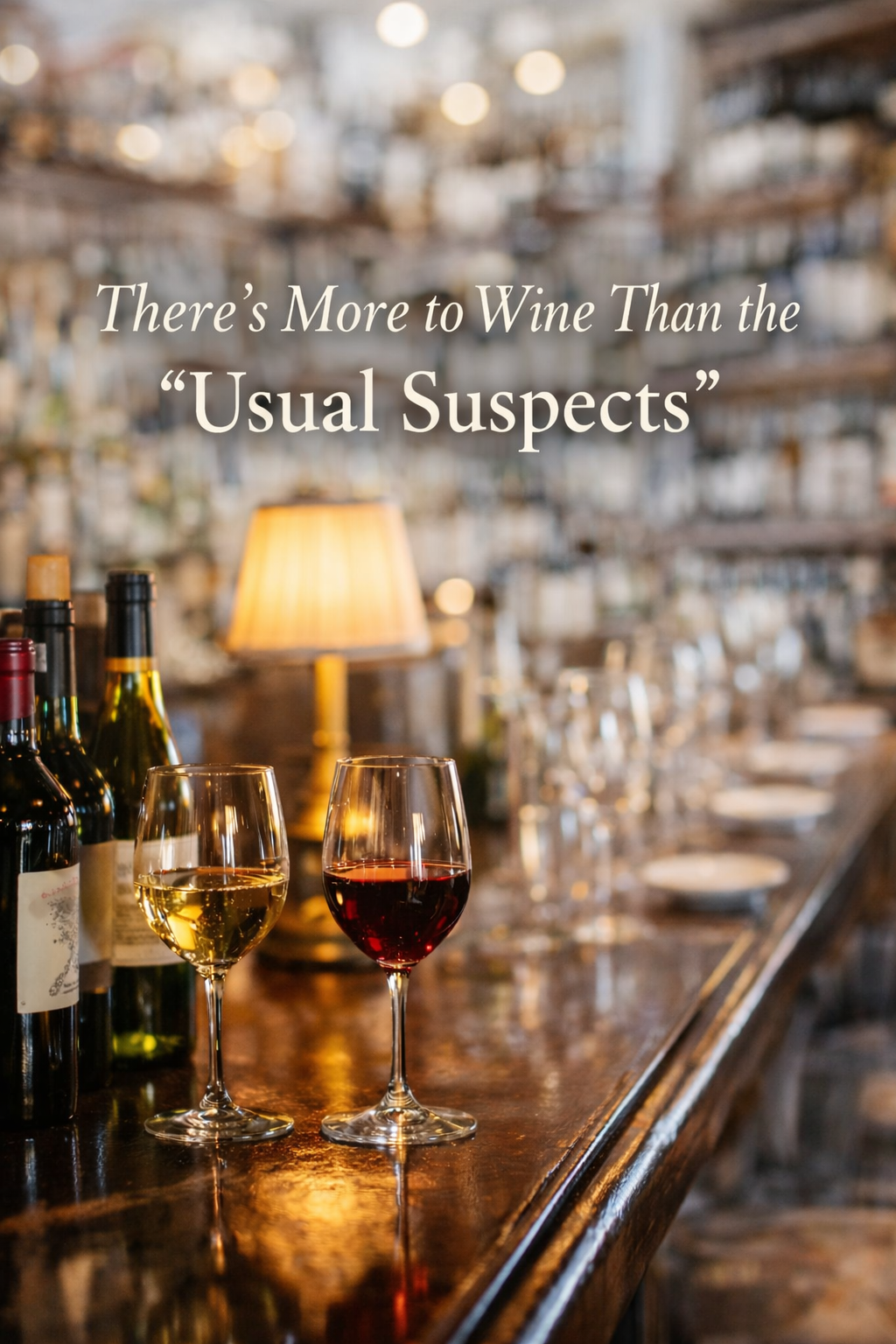
There is so much more to wine than the “usual suspects.”
And for restaurants willing to explore just beyond the expected, the reward is not just a better wine list. It is a more memorable, more differentiated guest experience.
One of the things we do at Uncorked is help shape wine programs that feel distinctive, aligned, and truly their own. That might mean refining a list so it better reflects the food menu and concept, identifying opportunities to introduce more interesting or underrepresented wines, or rethinking how the list is structured so it is easier for both staff and guests to navigate.
And it does not stop their. We stay involved, working alongside our clients as their programs evolve, making adjustments where needed and helping to ensure the list continues to feel relevant, intentional, and aligned over time.
It is not about adding complexity. It is about bringing clarity, intention, and a point of view to something that too often becomes routine.